Blog

  • Movement as an Investment: Why Our Mobility in Later Life Depends on It

    β€œMovement is an investment β€” and the body pays it back to us later.” This sentence describes a truth we often overlook in everyday life. We invest time, energy and attention daily in projects, deadlines, appointments and to‑dos. But what truly supports us in the long term often receives only the leftovers of our attention: our body.


    The natural course is downward β€” but we determine the speed

    There is a biological reality we must accept: the human body loses muscle mass with increasing age. This process begins earlier than many assume and proceeds continuously. But how fast it progresses is not predetermined. We have influence over it.
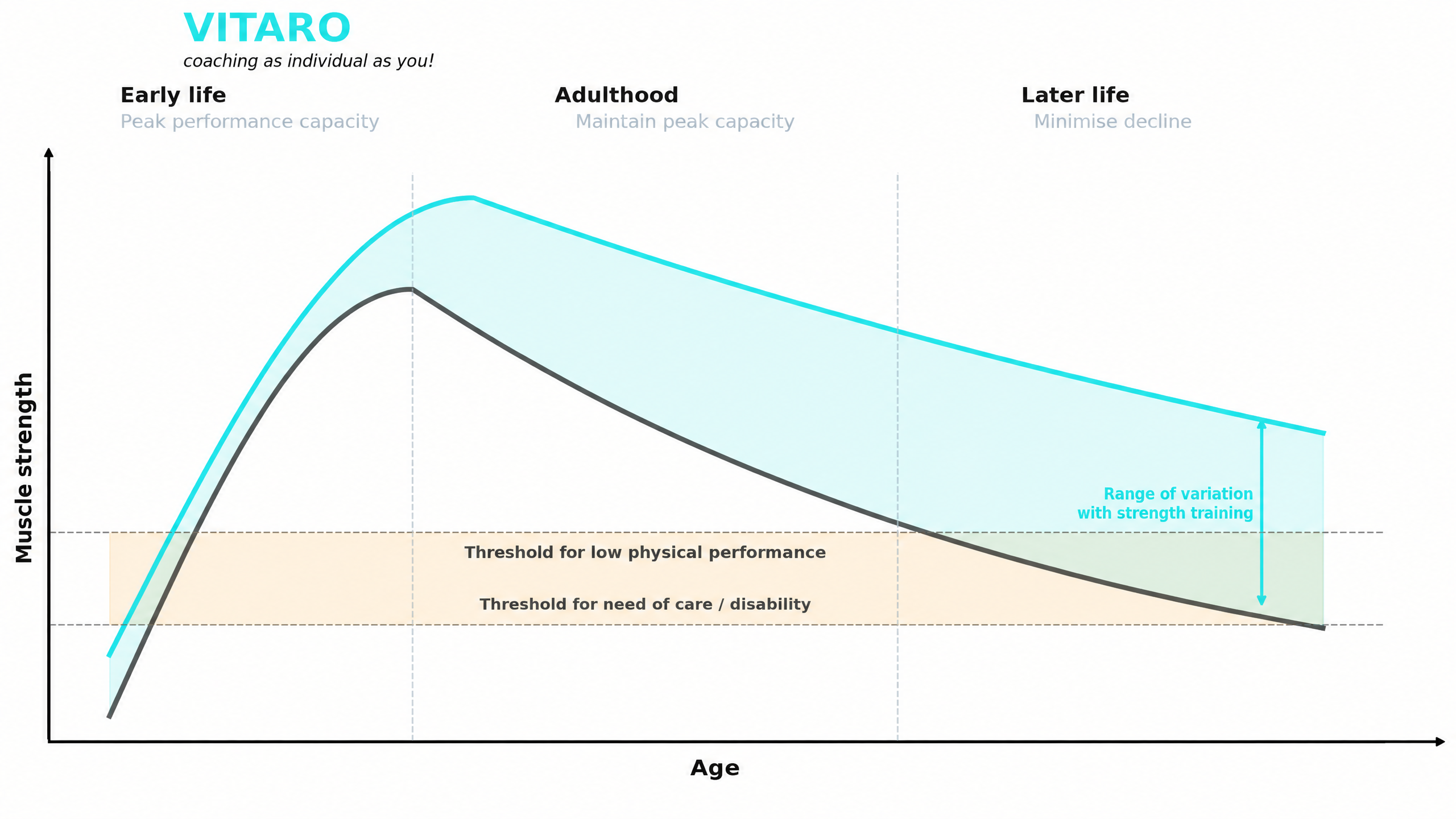

    VITARO diagram: strength loss and muscle strength with age – sarcopenia
    Muscle strength over the life course β€” the range of variation with regular strength training clearly shows: we can actively influence the course.

    Statistical facts about muscle loss

    Studies show clearly: from the age of 30 we lose on average 3–8% muscle mass per decade. From around 50 years this loss accelerates to up to 1–2% per year. This process is known as sarcopenia β€” an age-related decline of muscle mass and muscle strength.


    Why muscle mass is so crucial

    Muscle mass is far more than strength. It is the basis of our mobility, the key to stability and balance, a protective factor against falls, a central influence on metabolism and energy levels, and a decisive factor for our independence in later life.


    Training changes the course

    While the natural course is clearly downward, research shows just as clearly: regular strength training can reduce age-related muscle loss by up to 30–50%. People who move early and regularly lose significantly less muscle mass, remain mobile for longer and experience fewer limitations in later life.


    What we do today determines our tomorrow

    Mobility in later life does not only arise at 70. It arises now β€” in every training session, in every mobilisation, in every small routine we form. We cannot stop the natural course. But we can determine how steep it is. Movement is the only investment that guarantees to give us something back later.


    Source: Mitchell, W.K. et al. (2012): Sarcopenia, dynapenia, and the impact of advancing age on human skeletal muscle size and strength. National Center for Biotechnology Information (NCBI).


    Are you looking for more individual solutions for your training?
    Then feel free to contact me for an individual coaching – coaching as individual as you!
  • Back – Top 5 Exercises for Office Life

    Anyone who spends eight or more hours a day at a desk knows the problem: many meetings, little movement and high mental strain inevitably lead to tension. Frequent back and neck pain can result. But it doesn’t have to be that way! With targeted mobilisation and activation you can effectively counteract the stresses of everyday office life.

    Here are my Top 5 exercises that provide immediate relief. The best part: you can use them anywhere – in the office, at home, in a hotel or at the gym. Your back will thank you!


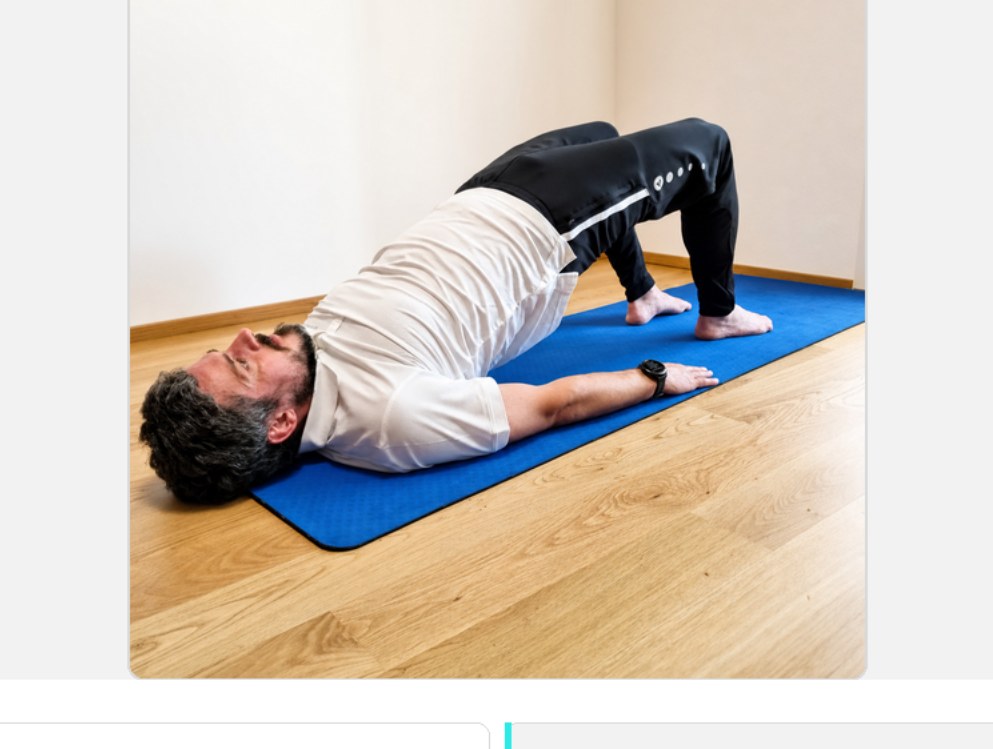
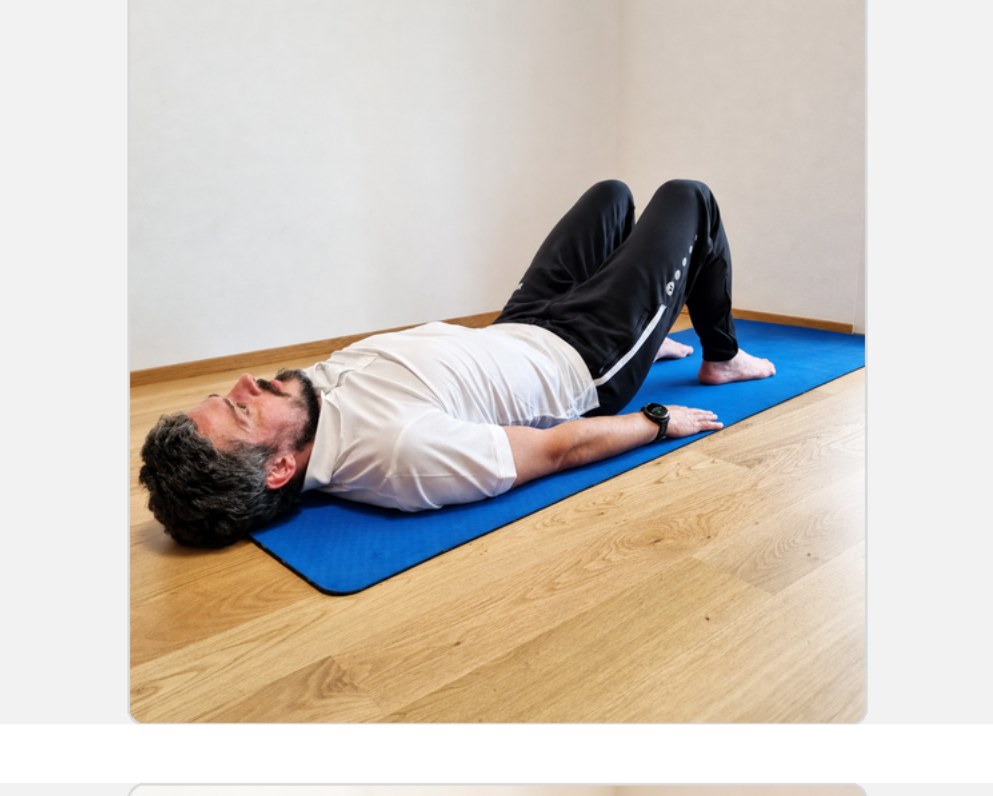
    1. Glute Bridge

    Effect: Specifically activates the glutes and lower back. Relieves the lumbar spine and reduces pressure after long periods of sitting. Strengthens core stability in the long term.

    Glute Bridge Starting position
    Starting position
    Glute Bridge End position
    End position
    1. Starting position: Lie on your back, knees bent, feet hip-width apart. Arms by your sides, spine neutral.
    2. Lift the hips in a controlled manner.
    3. Hold at the top for 1–2 seconds.
    4. Lower slowly.
    5. Recommendation: 10–15 repetitions, 2–3 sets.

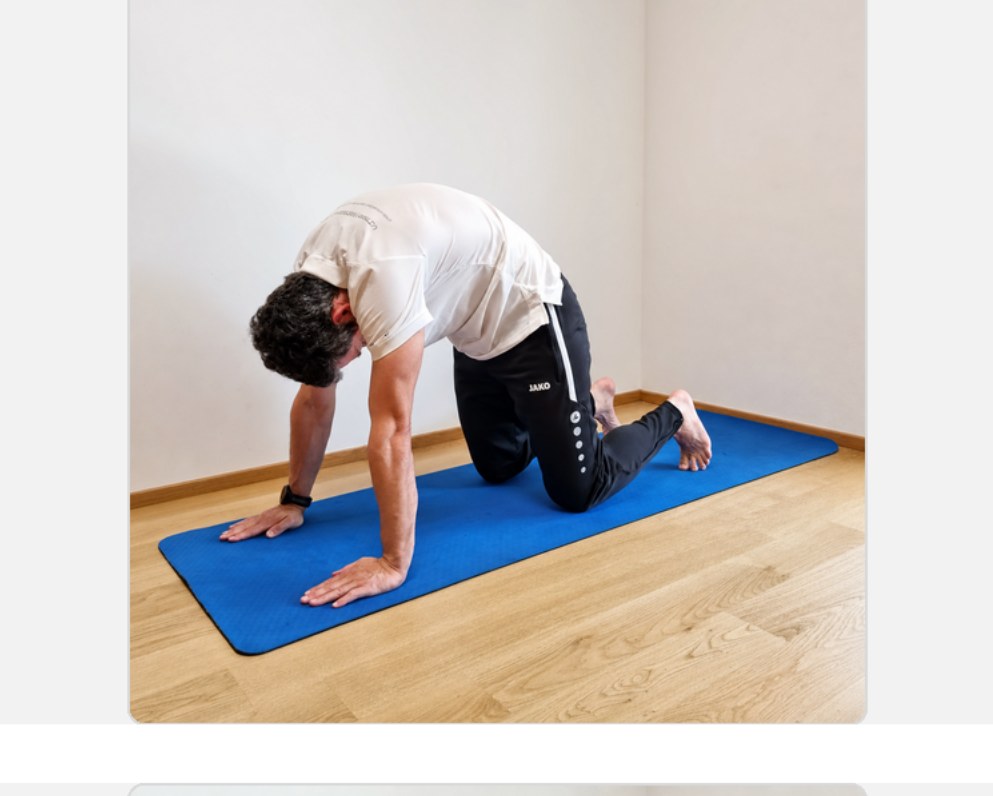
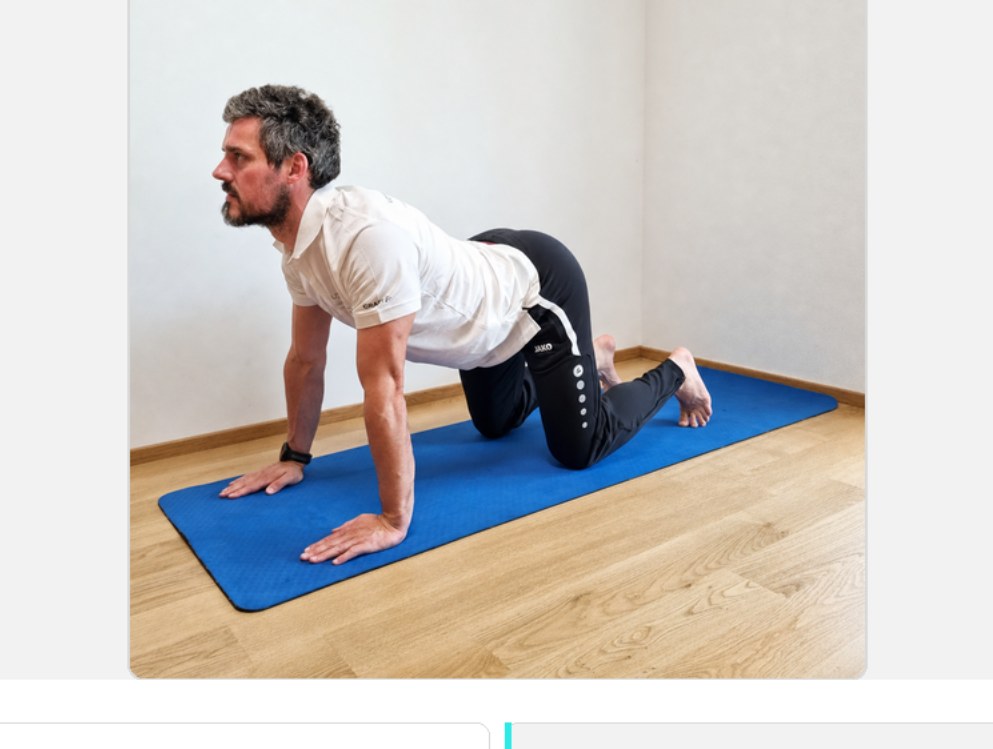
    2. Cat Cow

    Effect: Mobilises the entire spine. Releases tension after long meetings and promotes a healthy, upright posture.

    Cat Cow Starting position
    Starting position
    Cat Cow End position
    End position
    1. Starting position: Hands-and-knees position, hands under the shoulders, knees under the hips. Spine neutral.
    2. Cat: Round the back, lower the head, draw the belly in.
    3. Cow: Drop the back, open the chest, look slightly forward.
    4. Switch slowly and fluidly.
    5. Recommendation: 8–12 repetitions with steady breathing.

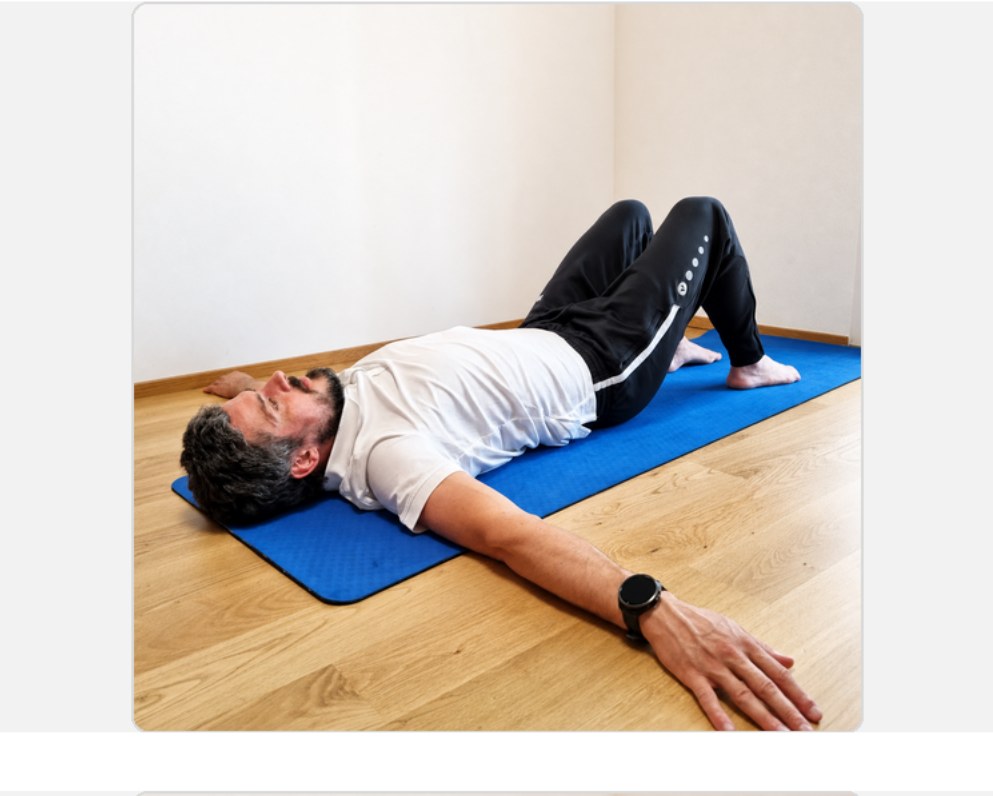
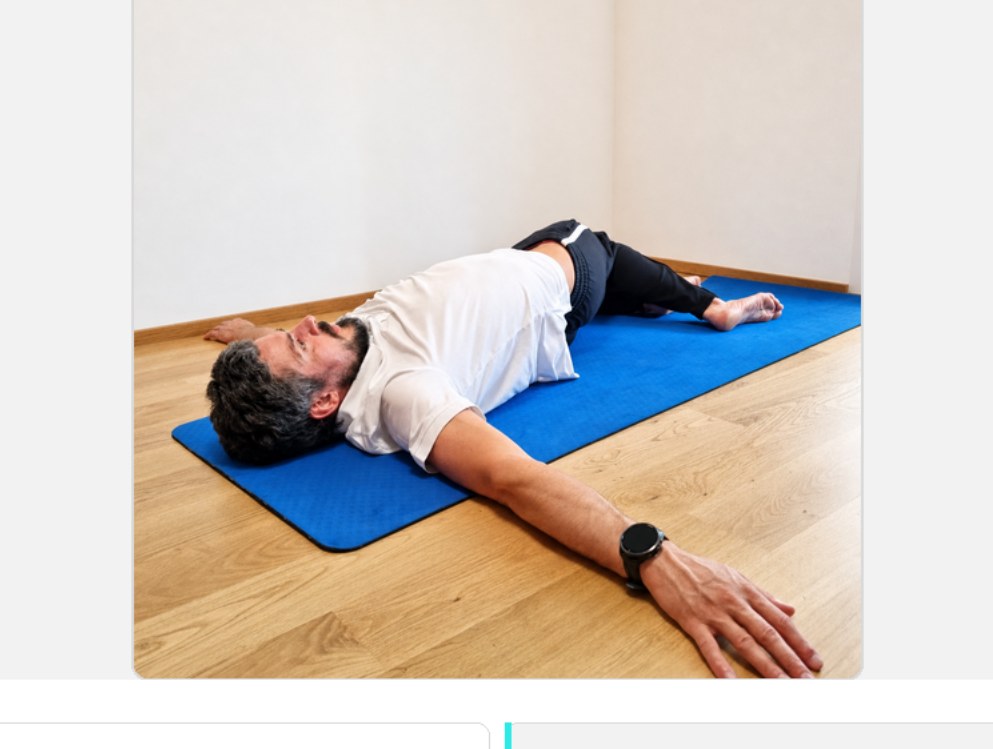
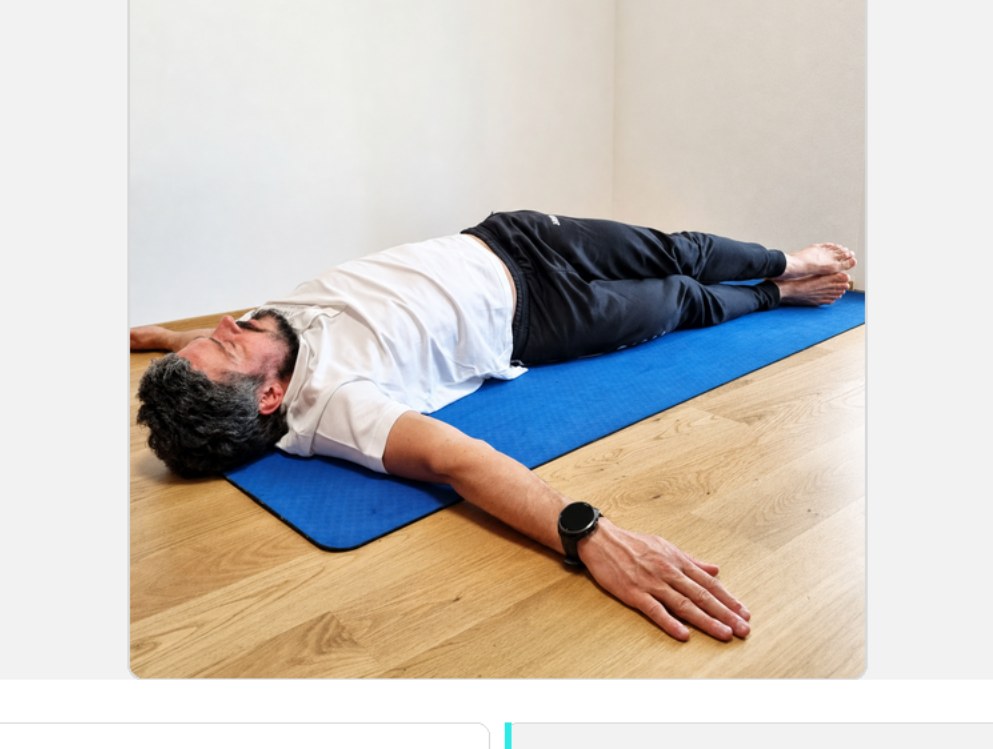
    3. 90/90 Lumbar Rotation

    Effect: Mobilises the lumbar spine, reduces stiffness after long periods of sitting and noticeably improves the ability to relax.

    90/90 Lumbar Rotation Starting position
    Starting position
    90/90 Lumbar Rotation End position
    End position
    1. Starting position: Lie on your back, legs placed to the side in a 90/90 angle.
    2. Extend your arms to the sides, shoulders remain on the floor.
    3. Slowly initiate the rotation to the opposite side.
    4. Hold the end position for 2–3 seconds.
    5. Switch sides.
    6. Recommendation: 6–8 repetitions per side.

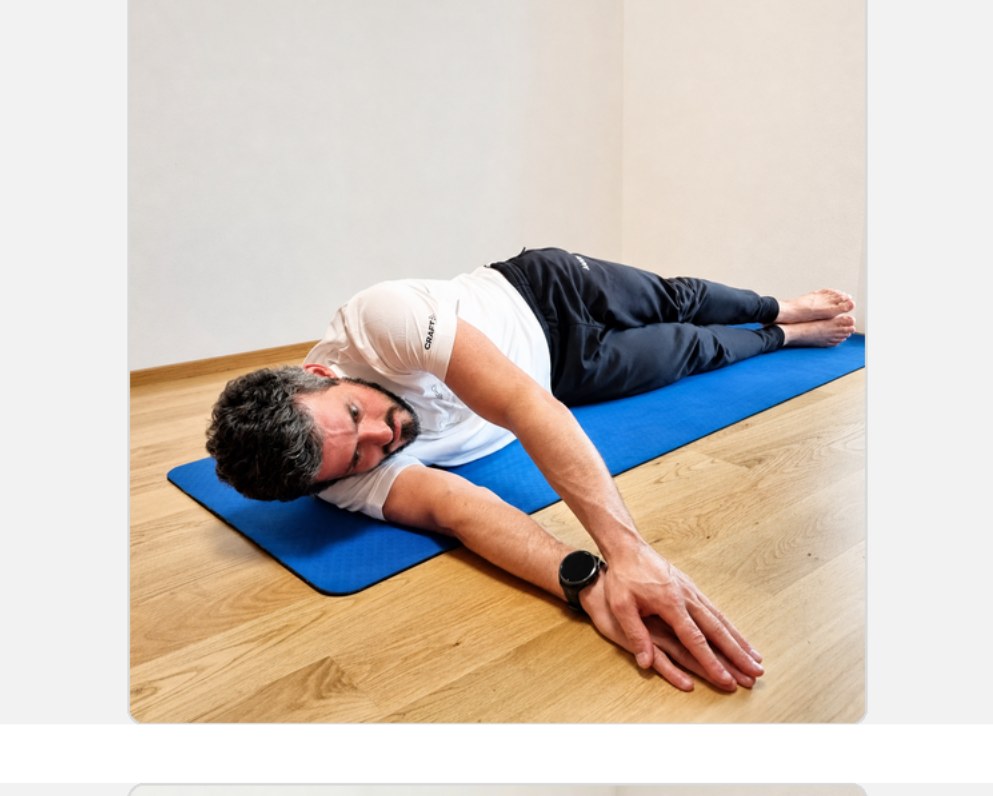
    4. Open Book 90Β°

    Effect: Mobilises the thoracic spine, improves rotational mobility and specifically addresses a rounded upper back caused by office work.

    Open Book 90Β° Starting position
    Starting position
    Open Book 90Β° End position
    End position
    1. Starting position: Lie on your side, knees bent to 90Β°, hands stacked, gaze forward.
    2. Slowly open the top arm backwards.
    3. The thoracic spine rotates with the movement – the pelvis remains stable.
    4. Hold the end position for 2–3 seconds.
    5. Return in a controlled manner.
    6. Recommendation: 6–8 repetitions per side.

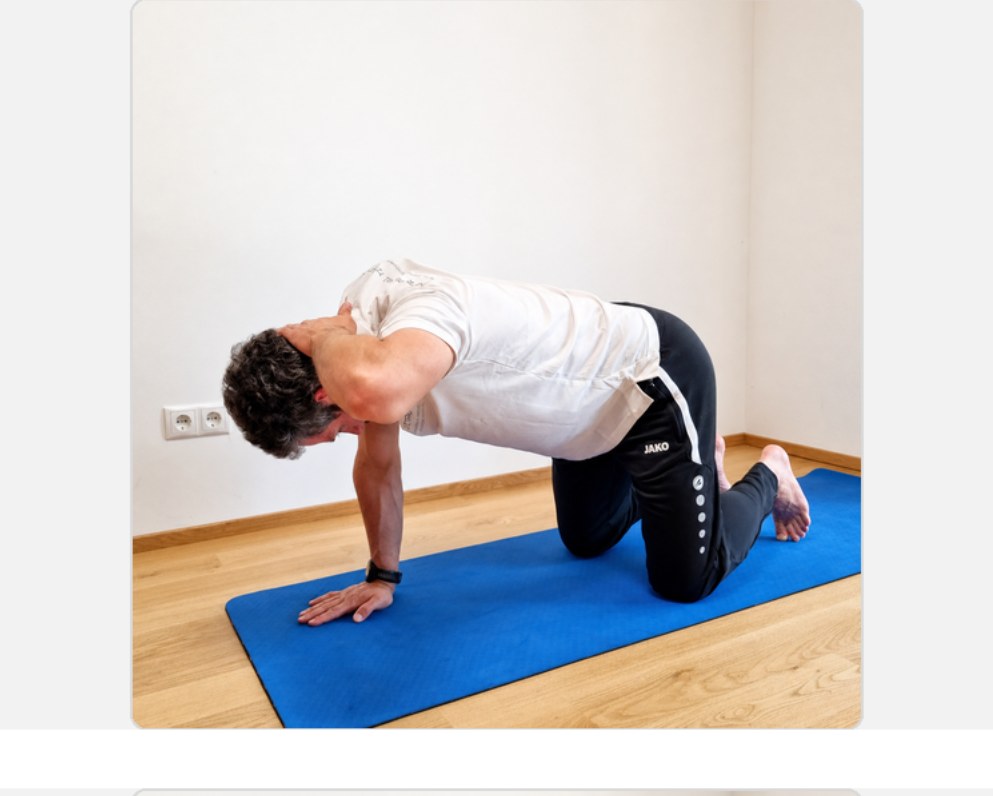
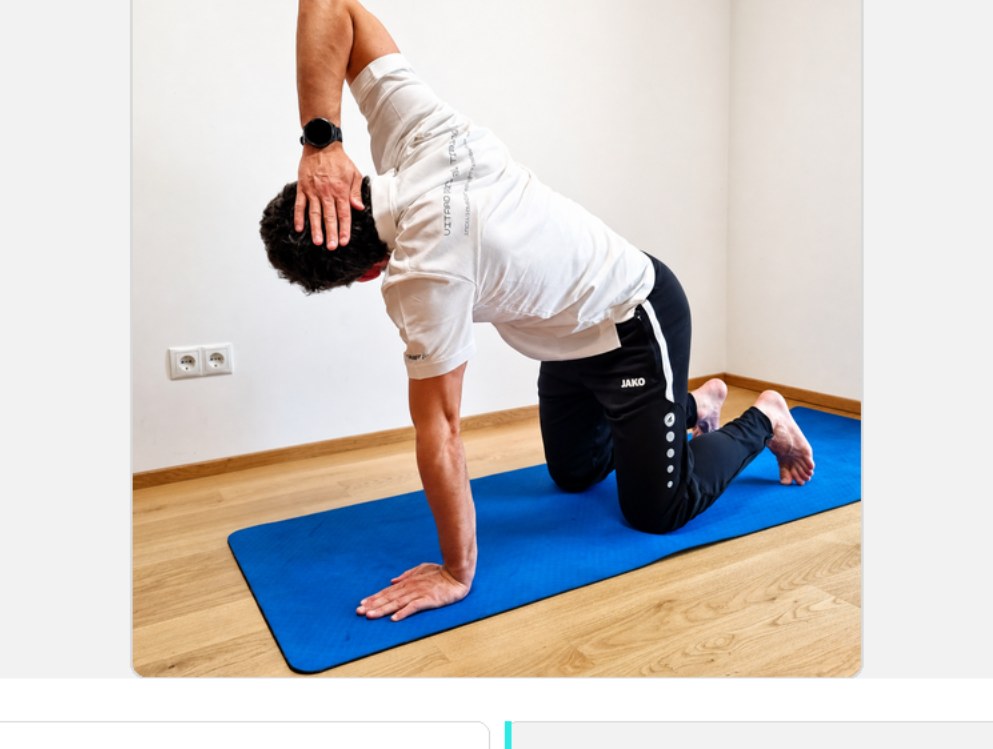
    5. Quadruped T-Spine Rotation

    Effect: Improves thoracic spine mobility, relieves tension in the upper back and supports an upright posture over time.

    Quadruped T-Spine Rotation Starting position
    Starting position
    Quadruped T-Spine Rotation End position
    End position
    1. Starting position: Hands-and-knees position, one hand behind the head.
    2. Elbow points to the side, spine neutral.
    3. Initiate the rotation slowly and controlled.
    4. The chest opens and the gaze follows the movement.
    5. Hold briefly at the top.
    6. Recommendation: 6–10 repetitions per side.

    Your back will thank you.

    Regular mobilisation and activation are essential to balance the strains of office life. These five exercises offer a quick, effective way to release tension and improve performance.

    Are you looking for more individual solutions for your training?
    Then feel free to contact me for personalised coaching – coaching as individual as you!